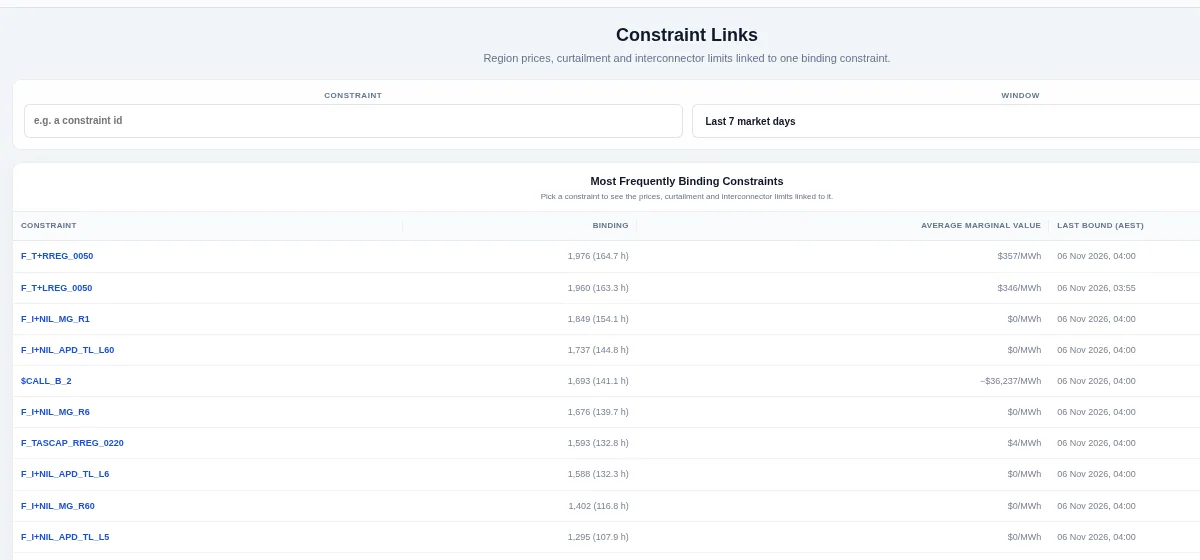
The marginal value of a binding constraint shows what that constraint costs the wholesale electricity market in each dispatch interval. Marginal values are shown in Grid Constraints in Network Map Markets.
What We Report
For each constraint that binds in a dispatch interval, Network Map reports the marginal value that the market operator's dispatch engine published for it. The marginal value is the change in the dispatch objective, in $/MWh terms, if the constraint's right-hand side were relaxed by one unit. A non-zero marginal value means the constraint is binding.
Network Map shows the value exactly as published, so it matches the market operator's own records.
Constraint Links lists the most frequently binding constraints with their average marginal value.
Where It Is Used
Binding constraints: every constraint with a non-zero marginal value in the latest complete dispatch interval, sorted by absolute value. Each result names the source file and its SHA-256 checksum.
Constraint set details: the marginal value appears in the history of each constraint equation.
Curtailment: the marginal value identifies which constraints bind, and the largest absolute value is kept as evidence for each network-caused curtailment. See Curtailment and Missed Revenue.
Reading the Sign
The sign of a marginal value follows the direction of the equation (≤ or ≥). Read the sign together with the equation type. Very large values come from the constraint violation penalty in the dispatch engine and mark a violated constraint.
Data Sources
Marginal values, the right-hand side, the left-hand side, the violation degree and the equation version come from the market operator's public dispatch constraint results.