Review the comparison record
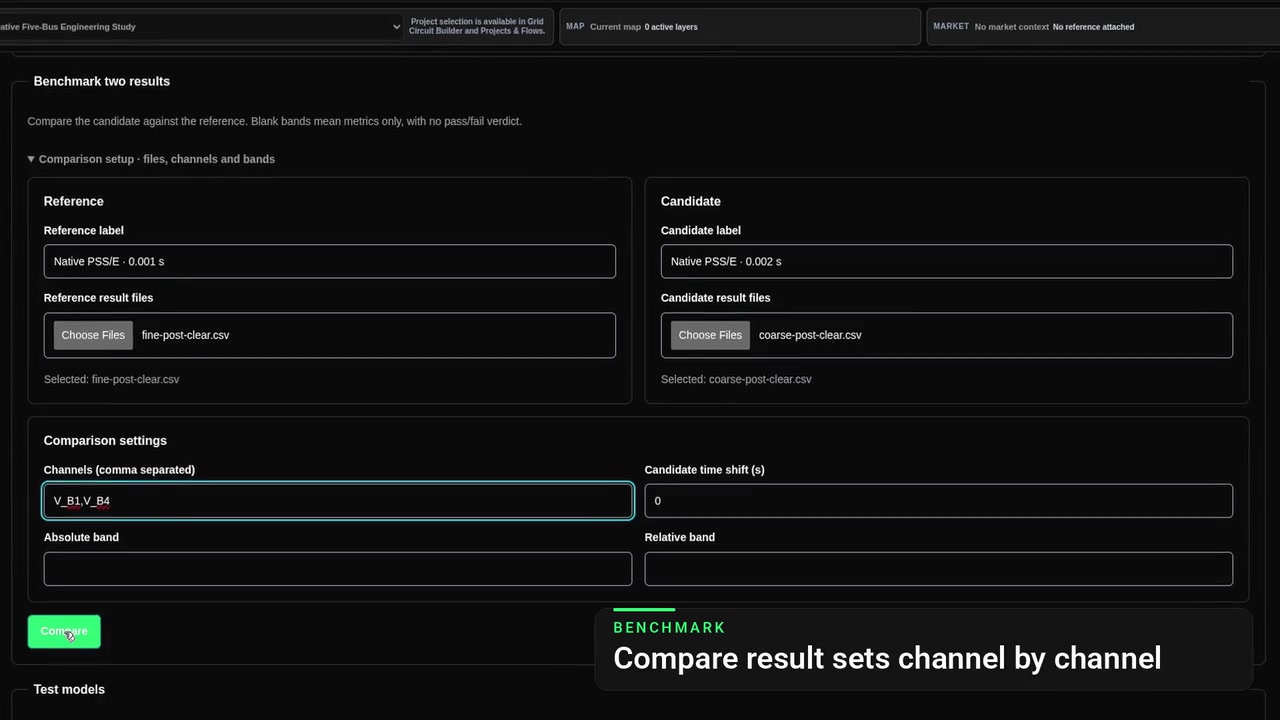
Compare the example reference and candidate result sets, then inspect the saved channel-metrics view.
Network Map Solutions
Compare a candidate result with a reference record. Check channels, units and time alignment, and keep the criteria visible.
Free account. Paid plans from US$75/month.
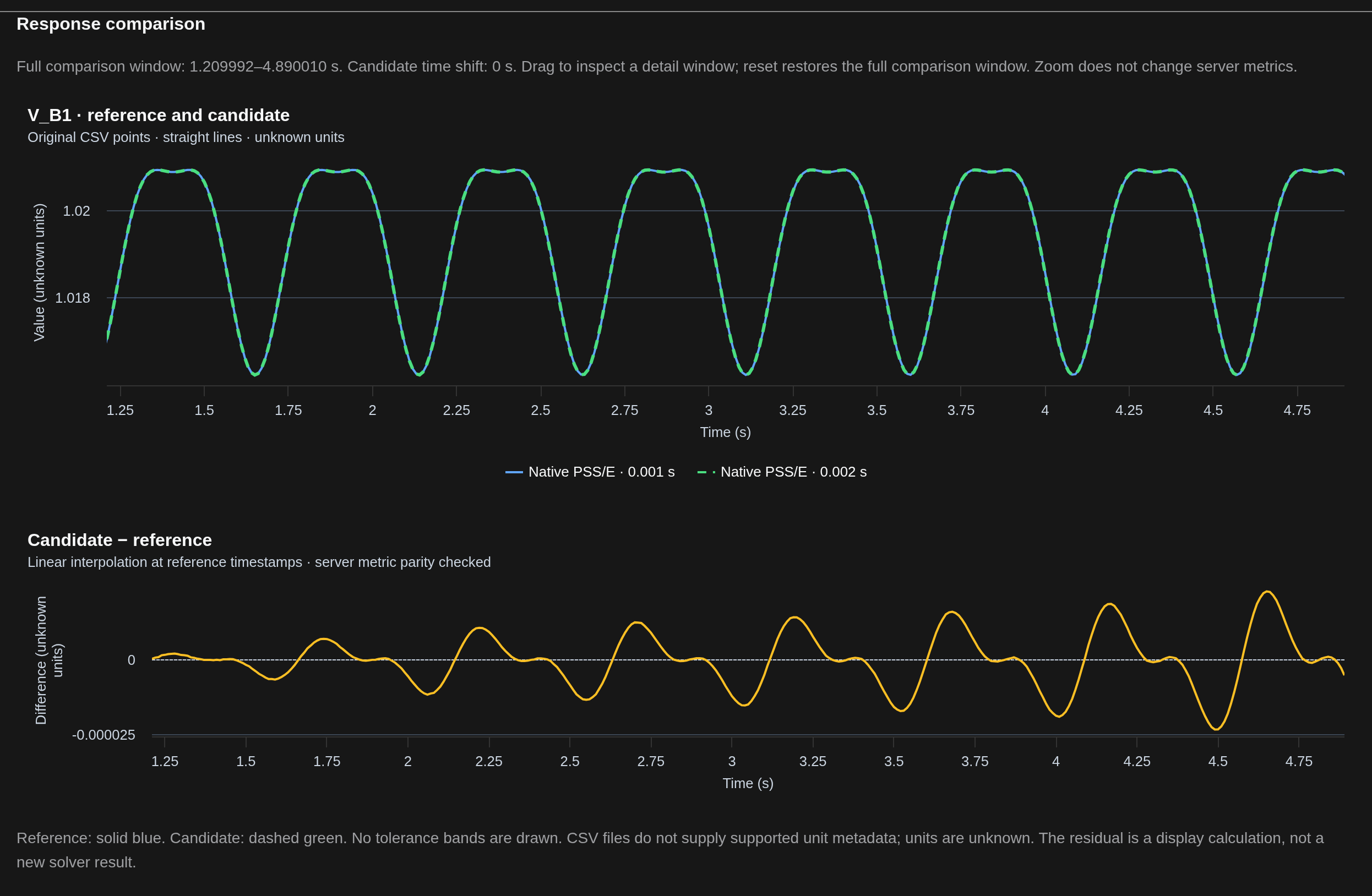
Example five-bus classical-machine simulation: V_B1 at 0.001 s and 0.002 s, with the residual.
Confirm both records describe the same quantities and event. Check scaling, units and sampling, and record any time shift.
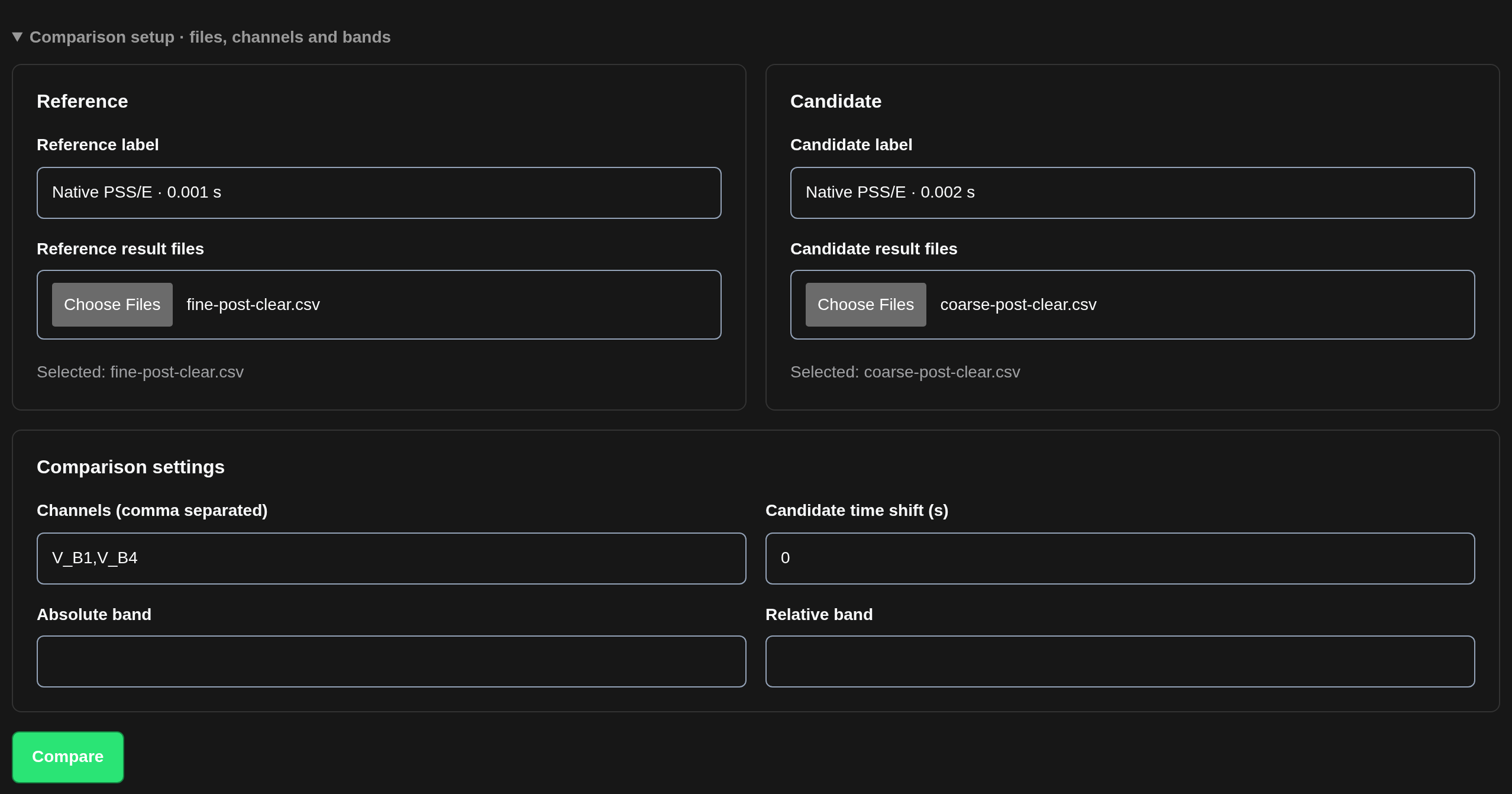
Reference and candidate from two timesteps, V_B1 and V_B4, zero time shift.
Plot the same case at two timesteps and shade the band between them, so small effects stay visible.
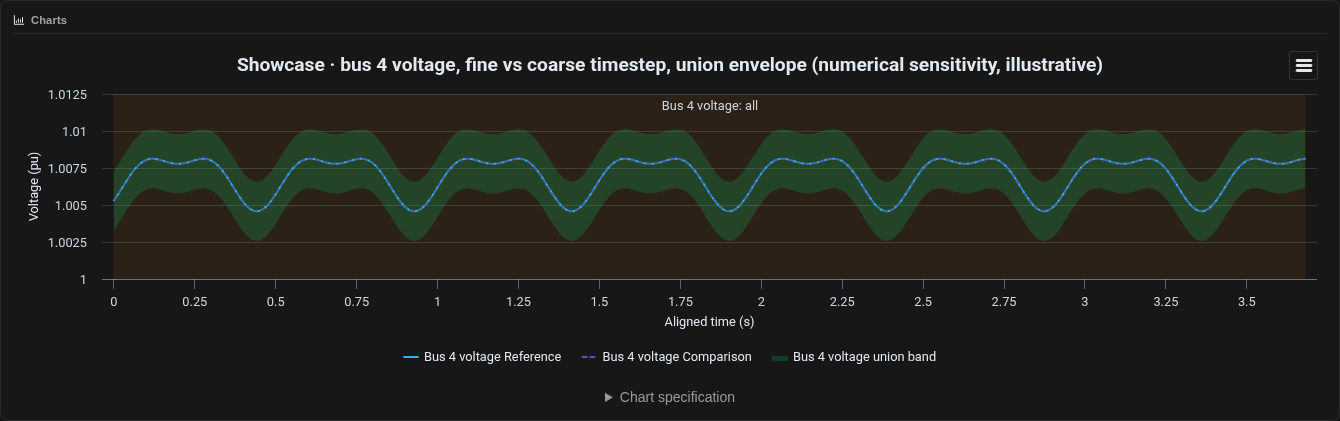
Same case at 0.001 s and 0.002 s timesteps, with the band between the runs shaded.
Use a sourced tolerance to assess results against your acceptance band. With no tolerance set, the comparison reports error metrics only.

Compare maximum, RMS and mean errors for the selected channels.
Choose a clip to play. These silent excerpts loop only after you start them; use the controls to pause.
Compare the example reference and candidate result sets, then inspect the saved channel-metrics view.
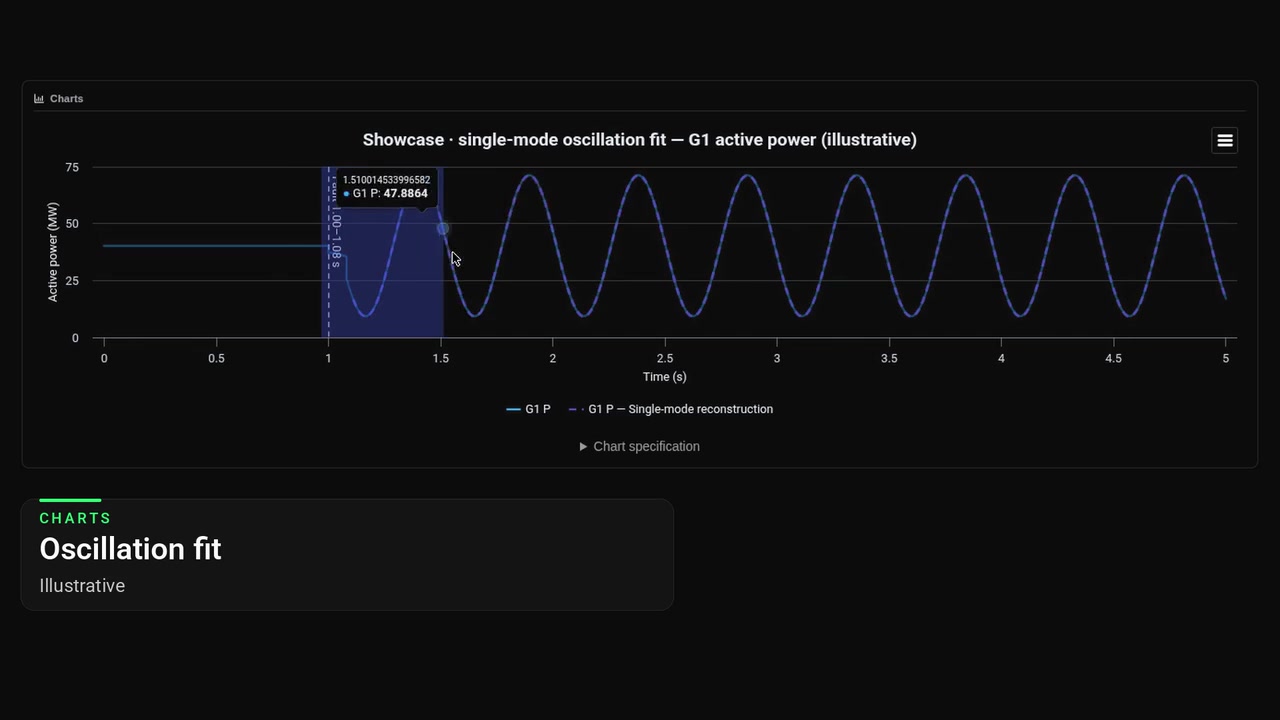
Explore the example simulation through an oscillation fit and a scatter plot with a regression line.
Bring reference and candidate results together with channel mappings, time alignment and study criteria. Keep the comparison and its source data ready for review.

Copyright © 2017-2026 Network Map LLC