Market analysis of 7 November 2026
An electricity bill can charge for energy, maximum demand and time connected. Each component has its own unit and assessment period. A demand-charge study becomes much clearer when those clocks are kept separate.
Our worked example uses a private tariff draft saved in Network Map and reviewed on 7 November 2026. Its rates are authored assumptions for the 2026 calendar year in UTC and AUD. Follow the inputs through the demand-charge calculation below.
Keep Energy, Demand And Fixed Charges Separate
The draft contains an energy rate of AUD 0.25/kWh, a demand rate of AUD 10/kW per month and a fixed charge of AUD 1 per day. Multiplying each rate by the correct quantity is essential. Energy needs kWh, demand needs the assessed kW value, and a daily charge needs eligible days.
A low-energy interval can still set a demand reference if its power is high and it falls inside the assessment window. Conversely, moving energy away from an expensive hour may reduce energy cost while leaving the chargeable demand unchanged. The tariff formula determines which result applies.
For demand management, first identify the eligible intervals and the demand unit. Then identify the rule that turns those observations into chargeable demand. Only then apply the price.
History Can Set A Floor
The saved authoring example uses the largest 3 eligible interval peaks across a 12-month assessment period. Its historic CSV contains 80, 95 and 90 kW on distinct dates. The upload produces a historic floor of 95 kW, the maximum supplied value.
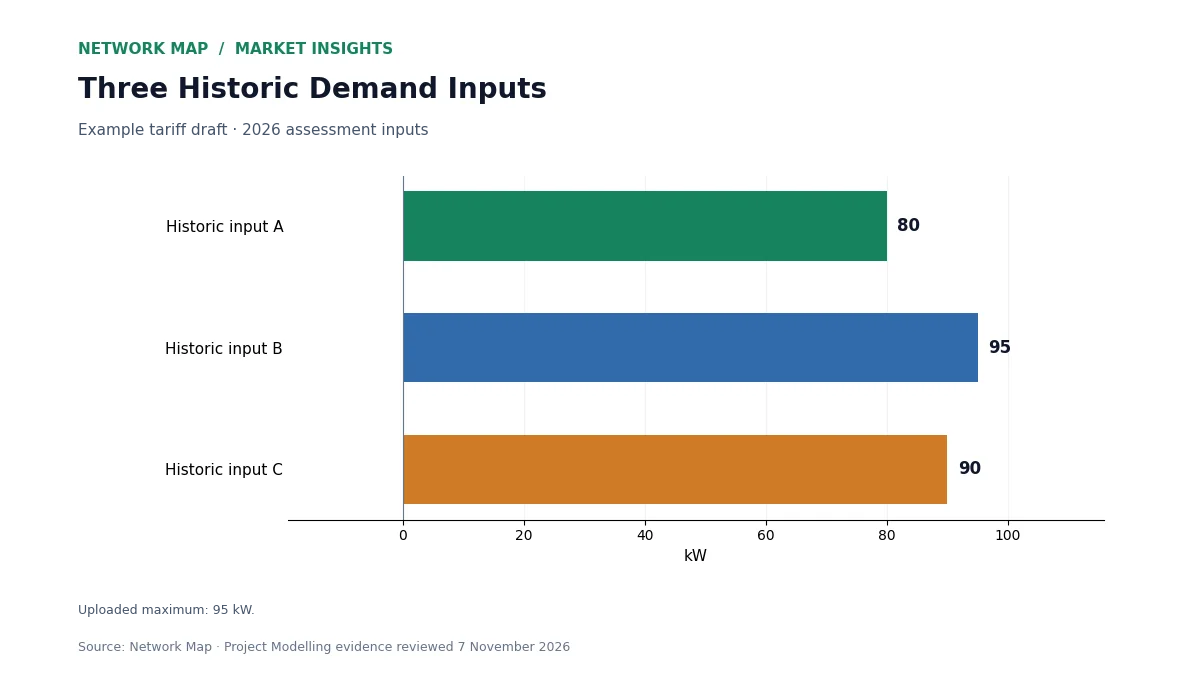
The arithmetic mean of those three values is 88.33 kW, rounded to two decimals. Their maximum is 95 kW. These are different summaries of the same inputs. The uploaded dates and values demonstrate the history intake. For settlement assessment, supply the complete set of eligible intervals.
If a reviewed tariff applies that 95 kW floor to a month at AUD 10/kW, the demand component is AUD 950. This is a conditional arithmetic example. The actual assessed amount also needs the applicable window, complete interval data and the source-stated formula.
A Rate Reset Is Different From A History Reset
Our draft’s energy policy uses a 2% compound annual change from 1 January, with a dated reset to AUD 0.28/kWh on 1 July 2026. That is a change to the rate. A demand-history reset would instead change which observations remain eligible for assessment.
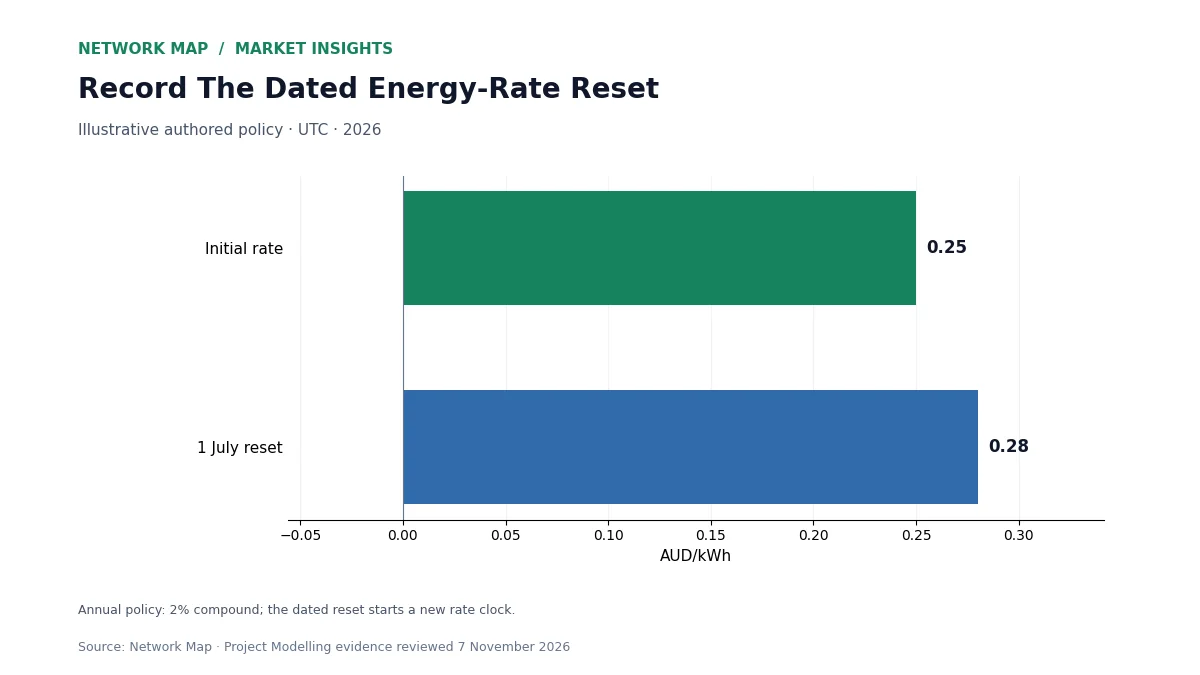
Keep those operations separate in the study. Record the tariff timezone, effective dates, recurring assessment rules and any historic-peak expiry. A change to the energy rate should not silently erase a demand reference. A history reset should not silently change the price per kW.
This is particularly useful when comparing a battery or flexible-load case against a baseline. Both cases need the same tariff version and assessment rules. Otherwise, a difference in charge may come from a changed billing assumption rather than the equipment’s operation.
Build A Traceable Tariff Study
- Retain the original source and qualifications with the authored version.
- Keep energy, demand and fixed rows in their own units.
- Align meter timestamps with the tariff timezone and eligible windows.
- Record historic peaks and source-stated expiry separately from dated rate changes.
The Network Tariffs guide covers versioned sources, private authoring and historic-peak intake. Use Profiles And Inputs for the time axis and Value And Finance to review the resulting project economics. Markets provides separate wholesale-price context.