Market analysis of 7 November 2026
A contract can change the price received for electricity, add a difference payment, or replace a receipt already counted in the project. These are different accounting jobs. Start with the energy boundary and follow each signed cash flow into the project ledger.
Our worked examples use Network Map Project Modelling outputs reviewed on 7 November 2026. The modelled settlements state volumes, prices and dates, with cash flows in Australian dollars.
The Same Energy Has Different Money Legs
Take the hour beginning 1 November 2026 at 00:00 UTC. Our contract example supplies 2 MWh, a strike price of AUD 100/MWh and a reference price of AUD 70/MWh. Coverage is 100%, the seller receives the payment, and the premium is zero. The fixed PPA pays AUD 200. That is the contracted energy volume multiplied by the strike price.
A physical contract for difference separates the same AUD 200 into an AUD 140 market receipt and an AUD 60 adjustment. The financial contract for difference records only the AUD 60 adjustment. Its ledger does not include the physical sale. The distinction changes what can be added to a portfolio total.
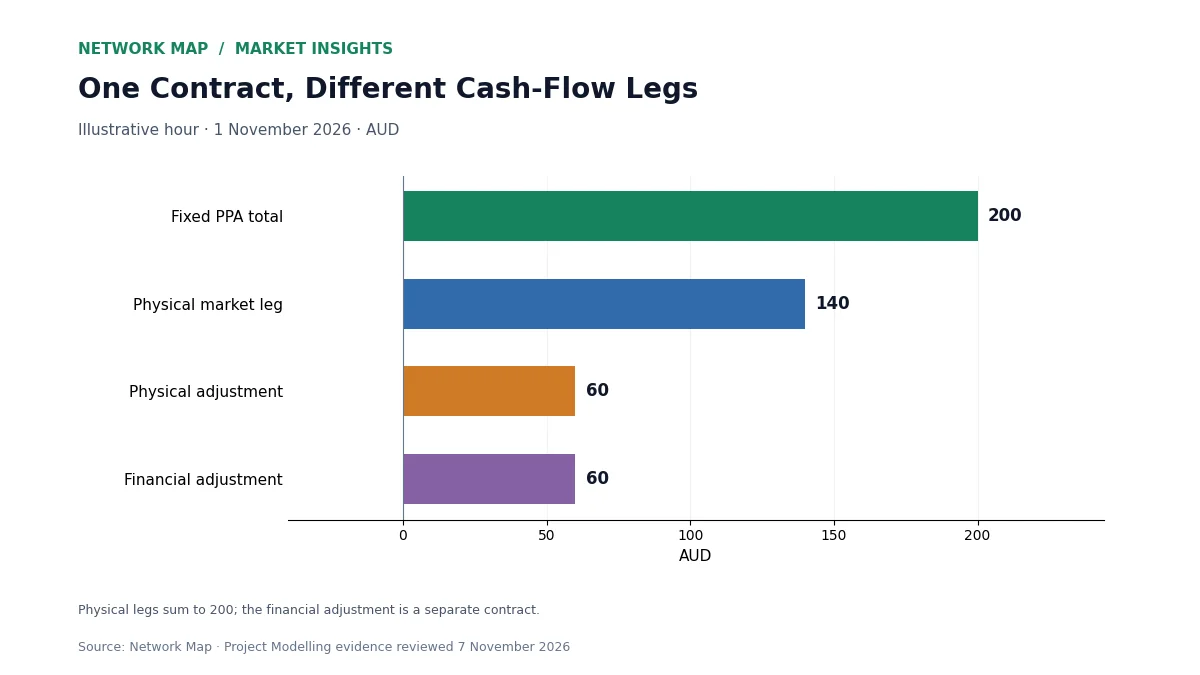
Read the contract type before comparing totals. A smaller financial-contract total can describe the same price hedge, because the electricity sale sits elsewhere. Add the market receipt once, in the ledger that actually owns it.
Replace An Existing Credit Before Adding The New Price
Now follow a separate saved project through the full modelled 2026 hourly year. This case has a constant 1 kW load and 2 kW solar. The supplied solar profile is at full output during hours 10:00–15:00 UTC each day and zero otherwise. The completed run exports 2.19 MWh.
The original export credit is AUD 0.04/kWh. The saved PPA covers all site exports at AUD 100/MWh and uses replacement accounting. The exported ledger contains AUD 219.00 of fixed payments and −AUD 87.60 of replaced export credit. The amount added to the existing project cash flows is therefore AUD 131.40.
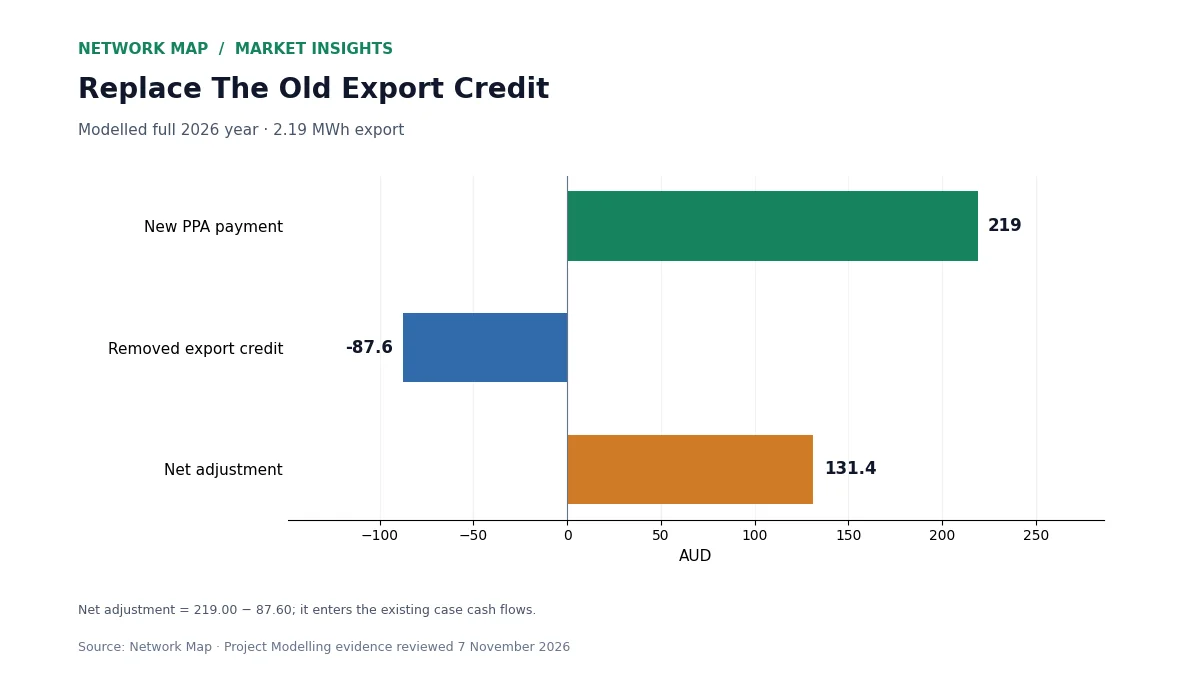
That distinction is commercially important. Adding the entire AUD 219.00 on top of the old export credit would count the same exported energy twice. Replacement accounting retains the new receipt and removes the old one.
Trace A Total Back To An Interval
For the hour starting 1 January 2026 at 10:00 UTC, the saved export is 0.001 MWh. The new payment is AUD 0.10, the removed credit is −AUD 0.04 and the net adjustment is AUD 0.06. These interval rows sum to the annual result. All 8,760 rows carry an estimate flag for the supplied example profiles and commercial terms.
This gives a practical reconciliation route: check the interval volume, check its price, check the accounting sign, then add the rows. Keep the interval unit visible. A price per MWh and a volume in kWh need conversion before multiplication.
Keep The Commercial Version With The Case
- Record the contract term, currency, timezone and energy basis.
- Save the exact commercial version and pin it to the case revision.
- Use replacement accounting when the new contract takes the place of an existing credit.
- Read the full settlement export beside the project cash-flow result.
The Contract Settlement guide explains the saved-instrument and standalone-ledger workflows. Use Value And Finance to follow the resulting adjustment into investment metrics. For observed market context, open Markets.