Network tariff analysis for 1 July 2026 to 30 June 2027
The network charge is one of the largest lines on a business electricity bill in Australia, and it is set by the local distribution network, not the retailer. Network Map’s new Network Tariff Library holds the 2026-27 tariff schedules of 14 distribution networks across ACT, New South Wales, Queensland, South Australia, Tasmania, Victoria and Western Australia, each taken from the operator’s published price list. These ten charts compare what small business, large business low voltage (LV) and high voltage (HV) customers pay on each network: fixed charges, peak energy rates, demand charges and the hours the peak applies.
All prices are in Australian dollars and exclude GST. They are the network tariffs effective 1 July 2026. Where a network publishes a bundled network price that includes transmission and jurisdictional scheme charges, that is the figure used here. Metering charges are included where the network adds them to the daily charge, as Ausgrid, Evoenergy and SA Power Networks do; Western Power bills its metering charge separately. For each network we use the default small business time-of-use tariff, its small business demand tariff, and its main large business LV and HV demand tariffs.
Chart 1: Small Business Fixed Charges Run From 41 Cents To $4.58 A Day
The daily fixed charge on the default small business time-of-use tariff is small on most networks. AusNet charges $148.94 a year on NAST12, which is 41 cents a day. CitiPower charges $0.5832 a day, United Energy $0.6164 and Jemena $250.20 a year.
The top of the range is in New South Wales, Queensland and Western Australia. Western Power charges $4.5781 a day on RT4, Ergon Energy $3.329 on EBTOUET1, Essential Energy $2.3784 and Ausgrid $2.2948, which includes its metering service charge. Over a year, Western Power’s fixed charge comes to $1,671.01, against AusNet’s $148.94. For a small site with modest use, the fixed charge can be a large share of the network bill.
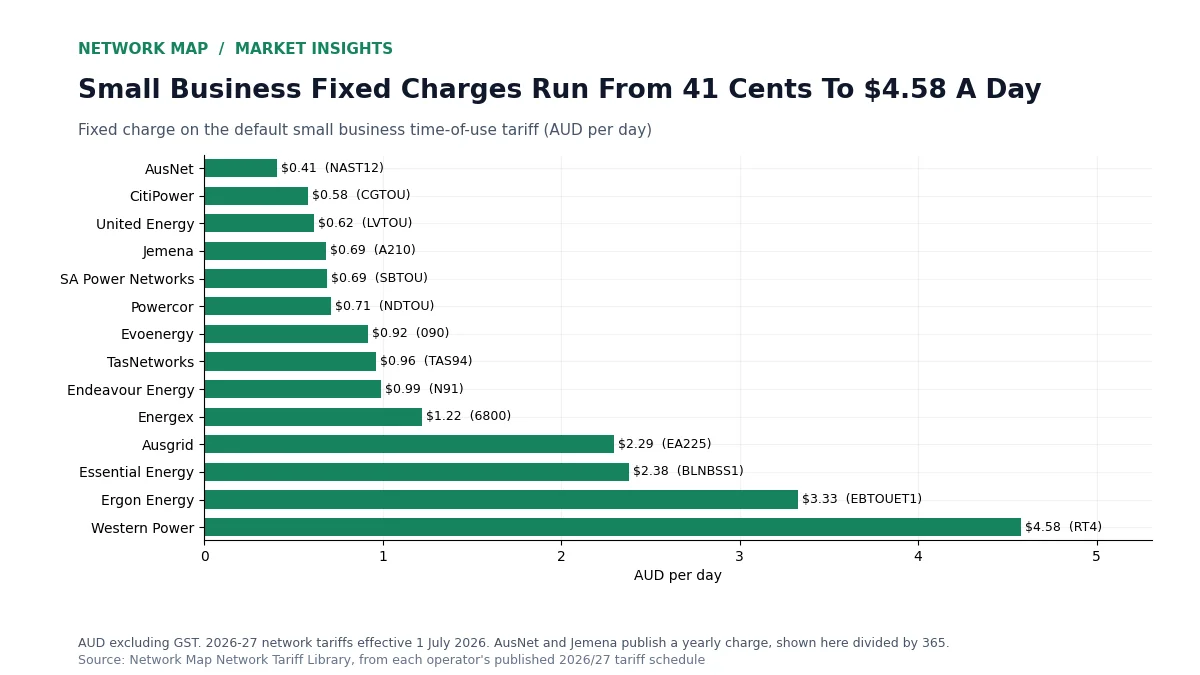
Chart 2: Small Business Peak Energy Ranges From 15 To 40 Cents A kWh
Ausgrid’s EA225 has the highest small business peak rate at 39.757 cents per kWh, against 5.90 cents off-peak. Western Power’s RT4 charges 33.336 cents on-peak and 8.59 cents off-peak. SA Power Networks charges 28.72 cents in its summer peak, Energex 26.318 cents and Ergon Energy 25.594 cents.
The Victorian networks sit at the bottom. CitiPower charges 15.39 cents peak, United Energy 15.54 cents and Jemena 17.02 cents, with off-peak rates from 3.713 cents to 3.89 cents. The gap between peak and off-peak is widest on Ausgrid at 33.86 cents and on Energex at 24.69 cents, where the off-peak rate of 1.627 cents applies from 11am to 1pm every day. Those are the networks where moving load out of the peak pays most per kWh.
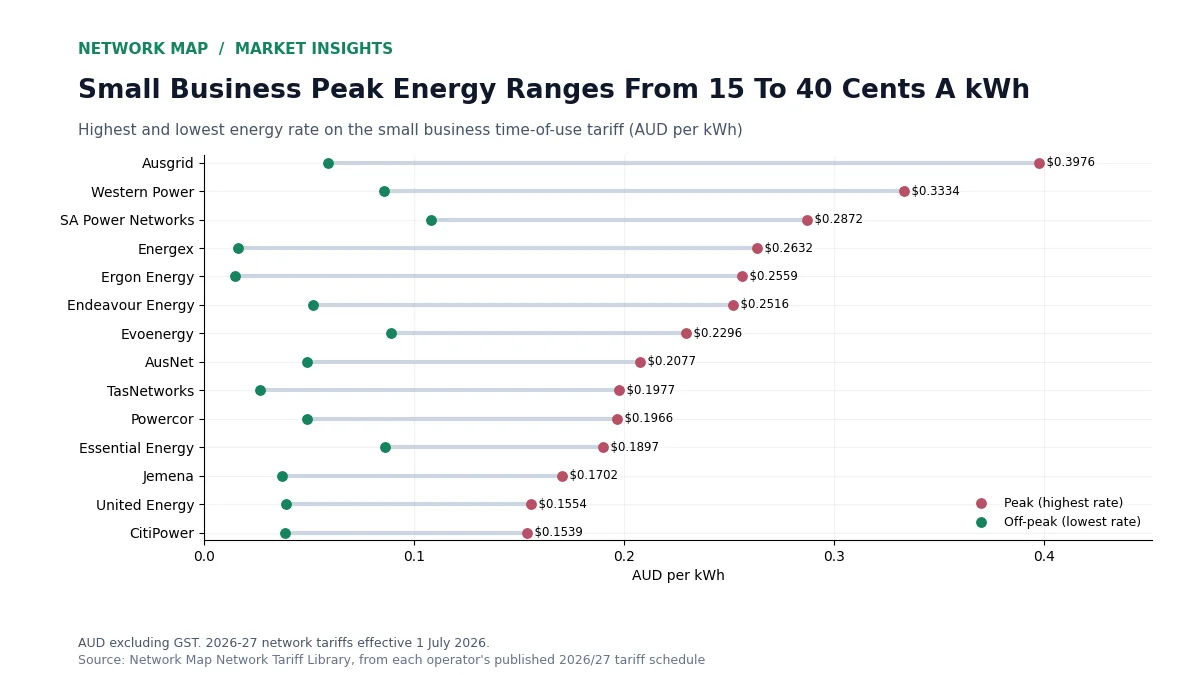
Chart 3: Small Business Peak Windows Last From 3 To 14 Hours
The peak window decides how hard it is to avoid the peak rate. Energex and Ergon Energy price their peak from 5pm to 8pm on weekdays, three hours. Endeavour Energy uses 4pm to 8pm on business days from November to March, and SA Power Networks 5pm to 9pm every day from November to March. Ausgrid’s peak runs from 3pm to 9pm on working weekdays from November to March and June to August.
The Victorian networks, AusNet, CitiPower, Jemena, Powercor and United Energy, all use a 12-hour peak from 9am to 9pm on weekdays. Western Power’s on-peak runs 14 hours, 8am to 10pm Monday to Friday. Evoenergy’s peak covers business hours, 7am to 5pm on weekdays. TasNetworks and Essential Energy have two peaks a day, a morning one starting at 7am and an evening one from 4pm or 3pm. A battery sized for a three-hour evening peak in Queensland will not cover a 12-hour peak in Victoria, so the window has to be matched to the site.
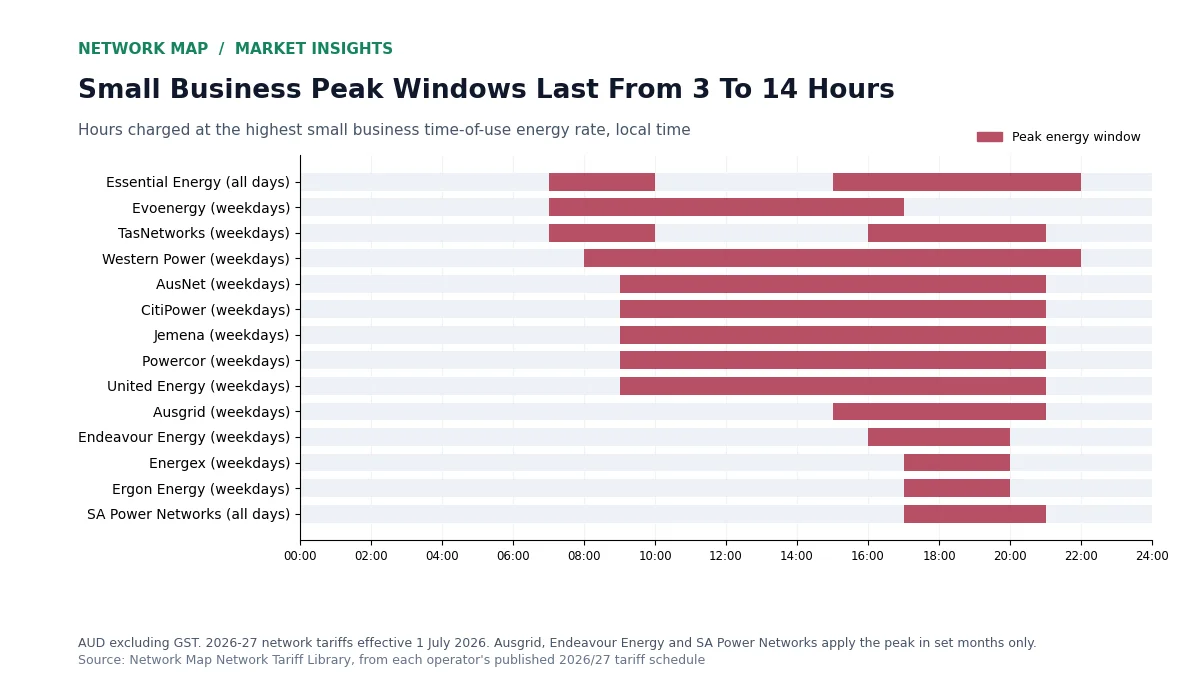
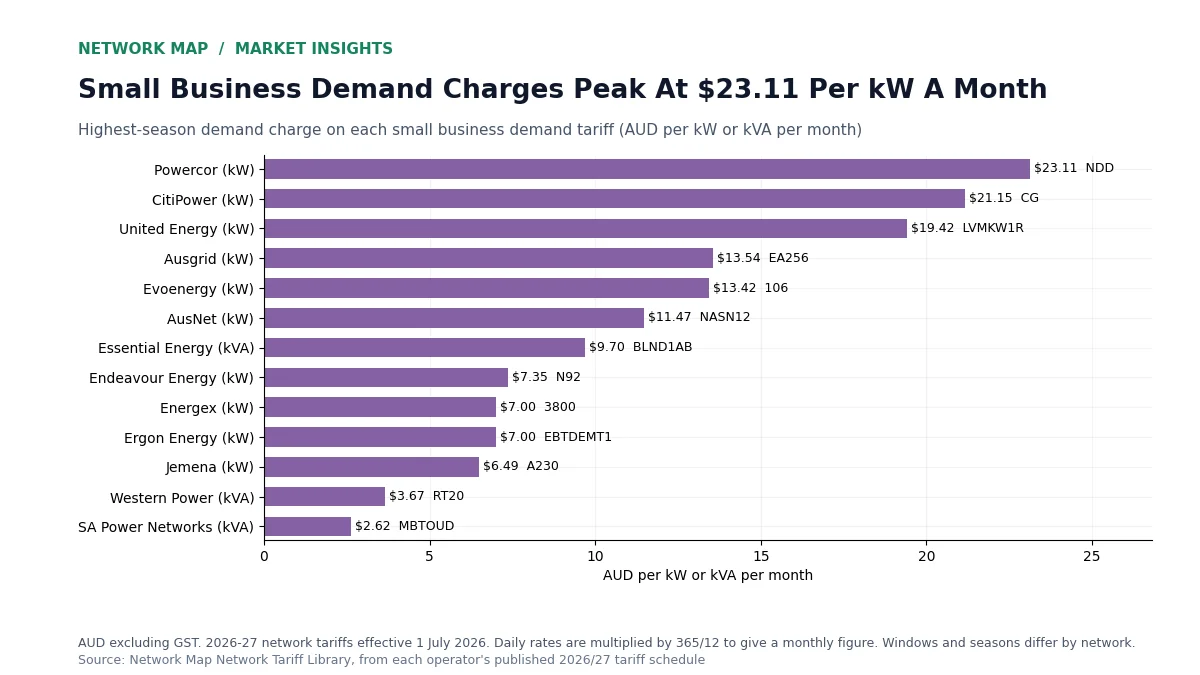
Chart 4: Small Business Demand Charges Peak At $23.11 Per kW A Month
For every network except TasNetworks we also compare a small business demand tariff, which charges for the highest demand in a window as well as for energy. To compare them we convert daily rates to a monthly figure by multiplying by 365/12. Powercor charges $23.11 per kW per month for summer demand on NDD, measured as the highest 30-minute kW between 10am and 6pm on workdays from December to March. CitiPower charges $21.15 in the same window, and United Energy $0.6386 per kW per day, equal to $19.42 a month.
Ausgrid’s EA256 charges $0.445311 per kW per day in its high season, $13.54 a month. Evoenergy charges $0.44122 per kW per day on tariff 106, and AusNet $11.4725 per kW per month in its December to March peak season. Energex and Ergon Energy both charge $7.00 per kW per month. The lowest are Western Power’s RT20 at $0.12051 per kVA per day and SA Power Networks’ MBTOUD at $0.0861 per kVA per day for annual demand. The summer seasons in Victoria mean a site that controls its demand on hot afternoons from December to March can save most of the charge.
See Network Tariffs On The Map
Chart 5: Large Business LV Fixed Charges Reach $53 A Day
For large business on low voltage the fixed charge ranges much further. Ergon Energy’s East Large TOU Demand and Energy tariff (ELTOUDT1) charges $53.344 a day. Ausgrid’s EA305 for sites using 160 to 750 MWh a year charges $25.47, Endeavour Energy’s N19 $24.14 and Essential Energy’s BLND3AO $22.3346.
Jemena charges $4,145.116 a year on A30C and AusNet $3,544.9344 on NSP56, about $11.36 and $9.71 a day. Evoenergy charges only $1.01121 a day on tariff 101. CitiPower, Powercor and United Energy list no fixed charge on their large LV tariffs, recovering their cost through demand and energy prices.
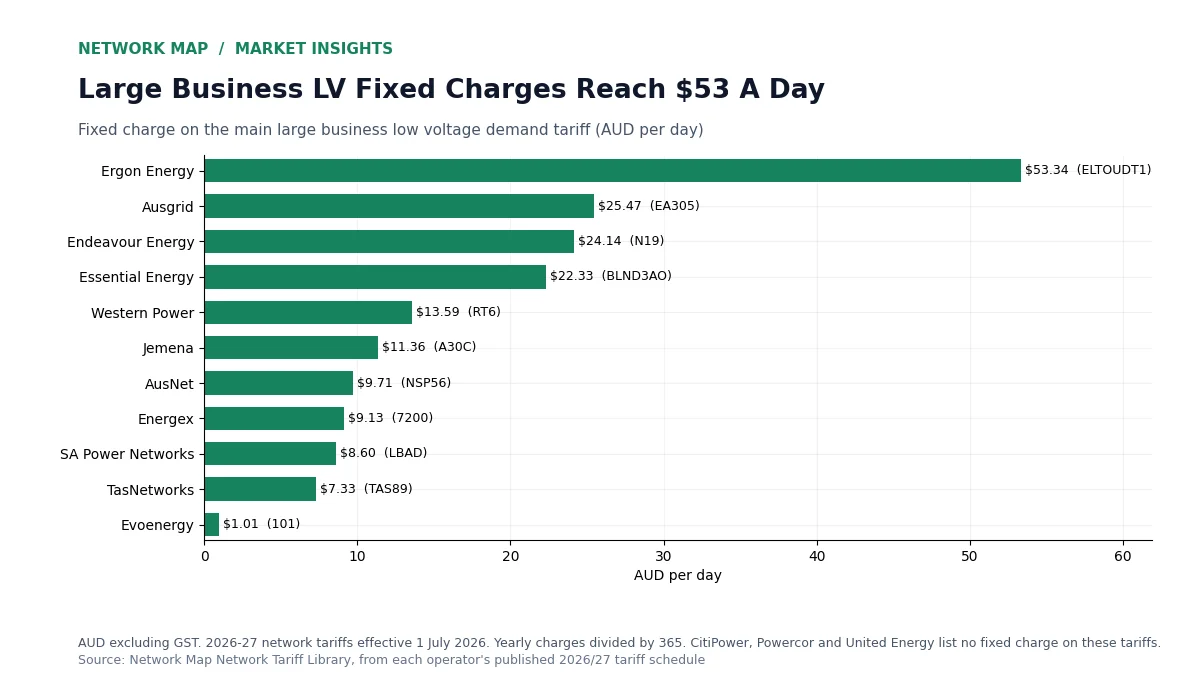
Chart 6: Large Business LV Top Energy Rates Run From 3 To 26 Cents
Once a site moves onto a large business demand tariff, the energy rate usually falls and the demand charge does more of the work. Ergon Energy is the exception, with a peak rate of 26.485 cents per kWh on ELTOUDT1 from 5pm to 8pm. AusNet’s NSP56 charges 17.483 cents peak and 5.535 cents off-peak, and Evoenergy 11.236 cents in business hours.
On most other networks the highest energy rate on these tariffs is under 9 cents. Ausgrid’s EA305 charges 8.2347 cents peak, Essential Energy 7.0201 cents and Endeavour Energy 6.1024 cents. CitiPower, Powercor and United Energy charge about 4 cents in their 7am to 7pm peak, and Energex’s 7200 tariff charges 2.947 cents at most. TasNetworks’ TAS89 and Western Power’s RT6 have no energy charge on these tariffs at all.
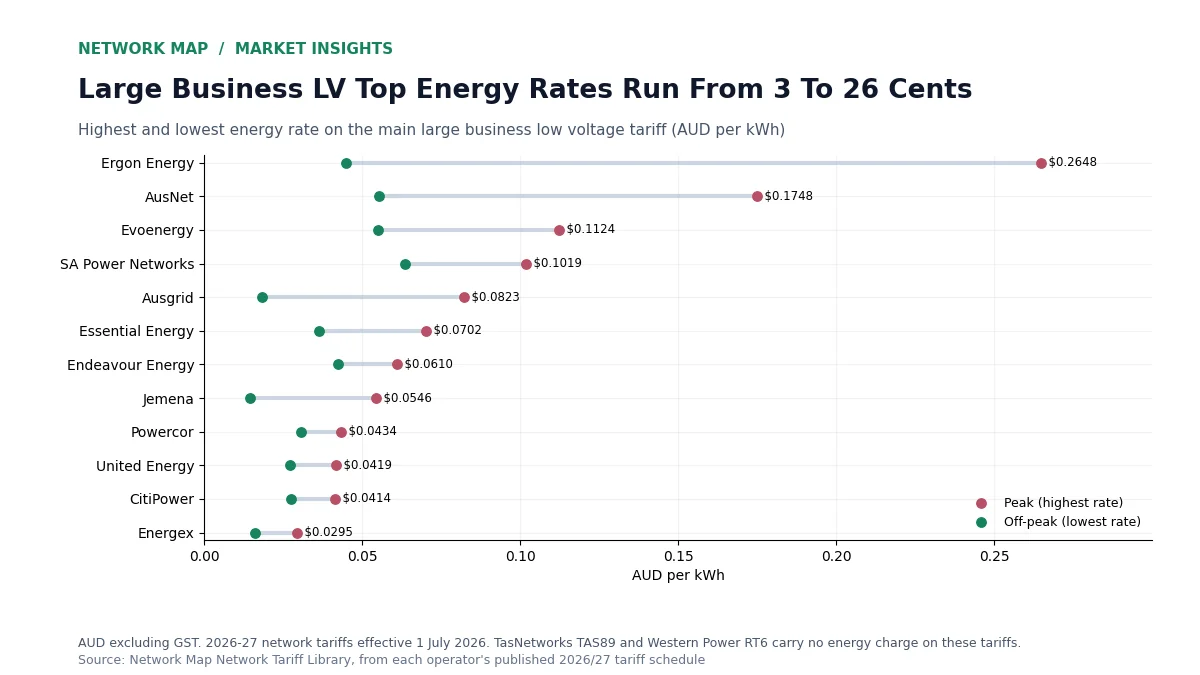
Chart 7: Large Business LV Demand Charges Range From $3.41 To $34.95 Per kVA
The demand charge is the main cost on most large business tariffs. Western Power’s RT6 charges $1.14894 per kVA per day on metered demand in the 0 to 300 kVA band, $34.95 a month. TasNetworks charges $0.6049 per kVA per day for peak demand on TAS89, Ausgrid $0.577962 for peak capacity on EA305 and Jemena $0.56133 for its summer demand incentive on A30C.
Energex charges $13.913 per kVA per month for peak demand and Ergon Energy $13.52, both measured from 5pm to 8pm. CitiPower and Powercor charge $12.54 and $12.10 per kVA per month on a rolling 12-month demand. AusNet’s critical peak demand charge is the lowest at $3.4061 per kVA per month, but NSP56 also has a capacity charge of $2.0435 and the highest energy rate after Ergon Energy. The measurement basis matters as much as the rate: Ausgrid, Western Power, the rolling 12-month tariffs and SA Power Networks’ LBAD charge a whole year for one peak, while Energex, Ergon Energy and Essential Energy reset every month.
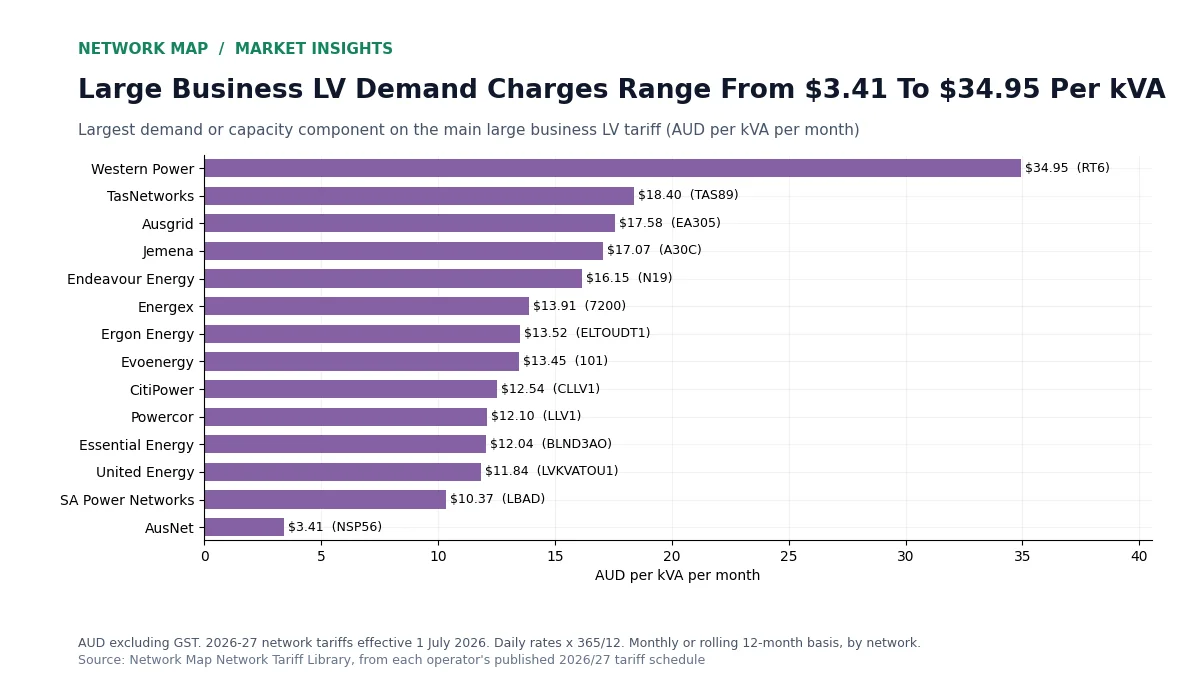
Chart 8: HV Demand Charges Run From $4.20 To $33.54 Per kVA A Month
High voltage customers pay a lower top demand rate than LV customers on every network except AusNet, where the HV critical peak demand charge of $6.7197 per kVA a month is higher than the LV one. Western Power’s RT5 charges $1.10283 per kVA per day in the 0 to 300 kVA band, $33.54 a month. Endeavour Energy charges $0.4196 per kVA per day in high season on N29 and Jemena $0.39769 for summer demand on A40C.
Energex’s 7400 tariff charges $12.018 per kVA per month, Essential Energy $11.5026 and Ergon Energy $11.092 plus an authorised demand charge of $8.579. The Victorian HV tariffs, CitiPower, Powercor and United Energy, charge about $8.80 per kVA a month for incentive demand from 1pm to 4pm, December to March. TasNetworks’ TAS15 for sites above 2 MVA charges $0.13792 per kVA per day on specified demand, $4.20 a month.
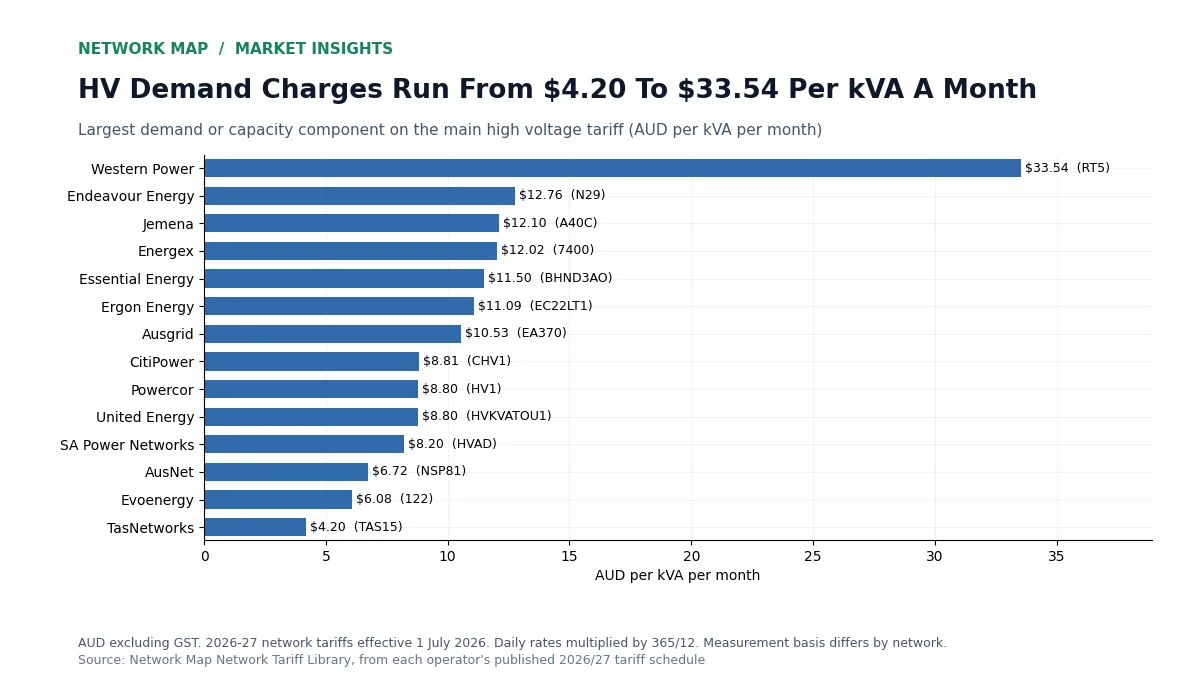
Chart 9: HV Fixed Charges Range From $2.36 To $114 A Day
Ergon Energy’s EC22LT1 has the highest HV fixed charge at $113.779 a day. Jemena’s HVCR tariff charges $32,255.677 a year, about $88.37 a day. Endeavour Energy charges $84.65 a day and Ausgrid $79.792649.
SA Power Networks charges $45.3698, TasNetworks $43.109 and Evoenergy $29.68634. AusNet’s NSP81 charges $7,829.4291 a year. Western Power’s RT5 charges only $2.35541 a day and recovers its cost through the demand charge in Chart 8. For an HV site the fixed charge is small next to demand: 1,000 kVA at Endeavour Energy’s high season rate is about $12,763 a month, against $2,575 of fixed charges.
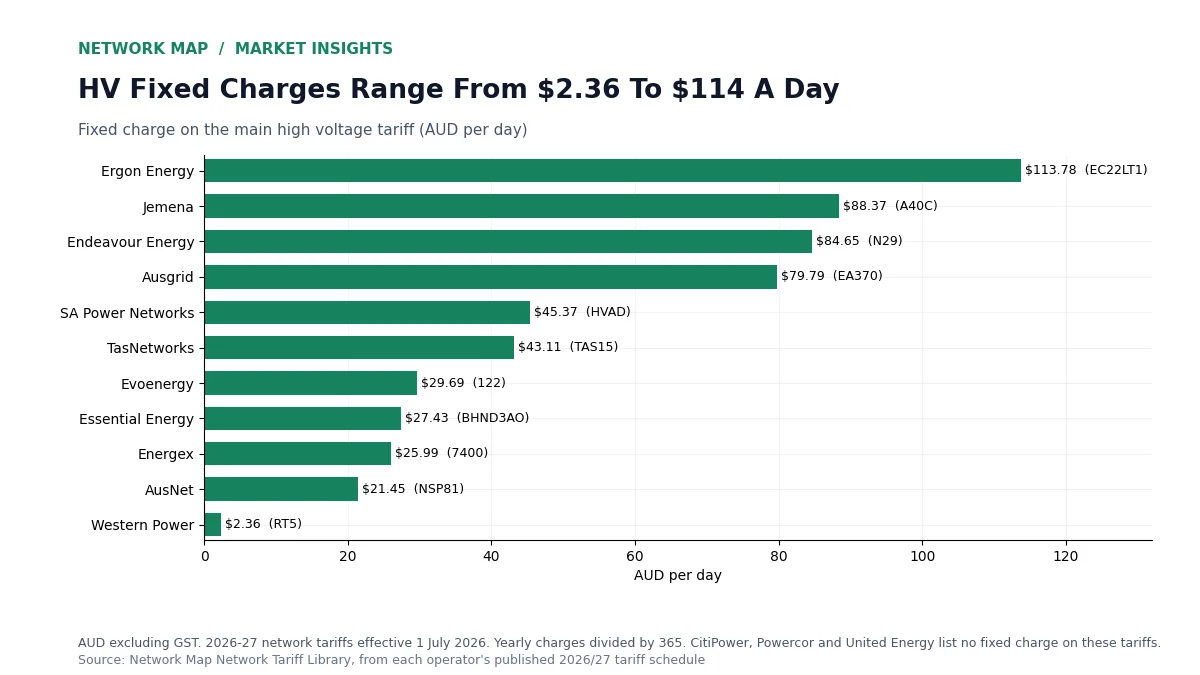
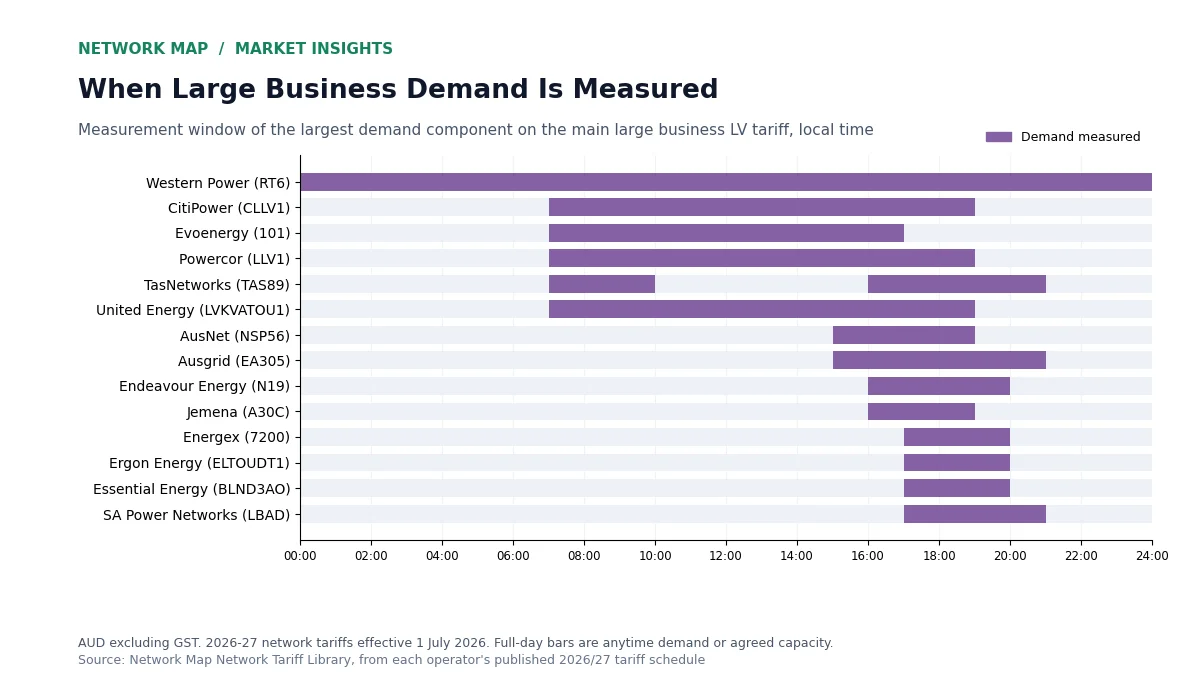
Chart 10: When Large Business Demand Is Measured
The window in which demand is measured is where most savings are found. Energex, Ergon Energy and Essential Energy measure LV peak demand from 5pm to 8pm. Endeavour Energy uses 4pm to 8pm and Jemena 4pm to 7pm for its summer incentive. Ausgrid measures peak capacity from 3pm to 9pm.
CitiPower, Powercor and United Energy measure their rolling 12-month demand from 7am to 7pm. Evoenergy uses 7am to 5pm, the same as its energy peak. TasNetworks measures peak demand in a morning and an evening window. Western Power’s RT6 charges on metered demand at any time. A short window makes demand control simple, because a battery or load controller only has to act for three or four hours a day. A long or anytime window needs a larger battery, or a change in how the site runs.
What It All Means
- The network sets the shape of the bill. Small business peak rates range from 15 to 40 cents and large business demand rates from $3.41 to $34.95 per kVA a month, depending only on location.
- Peak windows differ by up to 11 hours. Three-hour evening peaks in Queensland are easy to avoid; 12-hour weekday peaks in Victoria need a different approach.
- Demand charges reward control. On large business tariffs demand is usually the largest cost, and many networks charge a whole year for a single peak.
- Know the basis. Monthly, rolling 12-month and agreed capacity charges behave very differently when a site adds a battery or new load.
- Compare annual cost, not one rate. Low energy rates usually come with higher fixed or demand charges.
Model It In Network Map
The Network Tariff Library puts every Australian distribution network’s 2026-27 tariff schedule in one place, with the source document and tariff year for each. Project Modelling can now load network tariffs, so you can apply the right network tariff to a solar, battery or load project, test peak shifting and demand reduction on a real load profile, and compare sites across networks.
Sign Up To Model Network Tariffs
Every figure in this article comes from the Network Map Network Tariff Library, which records each network’s published 2026-27 tariff schedule, effective 1 July 2026. Prices exclude GST. Conversions from daily or yearly rates use 365 days and 365/12 days a month; no published rate has been estimated or adjusted.
Sources
Each distribution network’s published 2026-27 network tariff schedule:
- AusNet
- Ausgrid
- CitiPower
- Endeavour Energy
- Energex
- Ergon Energy
- Essential Energy
- Evoenergy
- Jemena
- Powercor
- SA Power Networks
- TasNetworks
- United Energy
- Western Power