Market analysis of 6 July 2026
The high-impact network outage schedule published on 6 July 2026 listed 2 non-withdrawn entries active on 6 July 2026, 2 of them flagged as interregional.
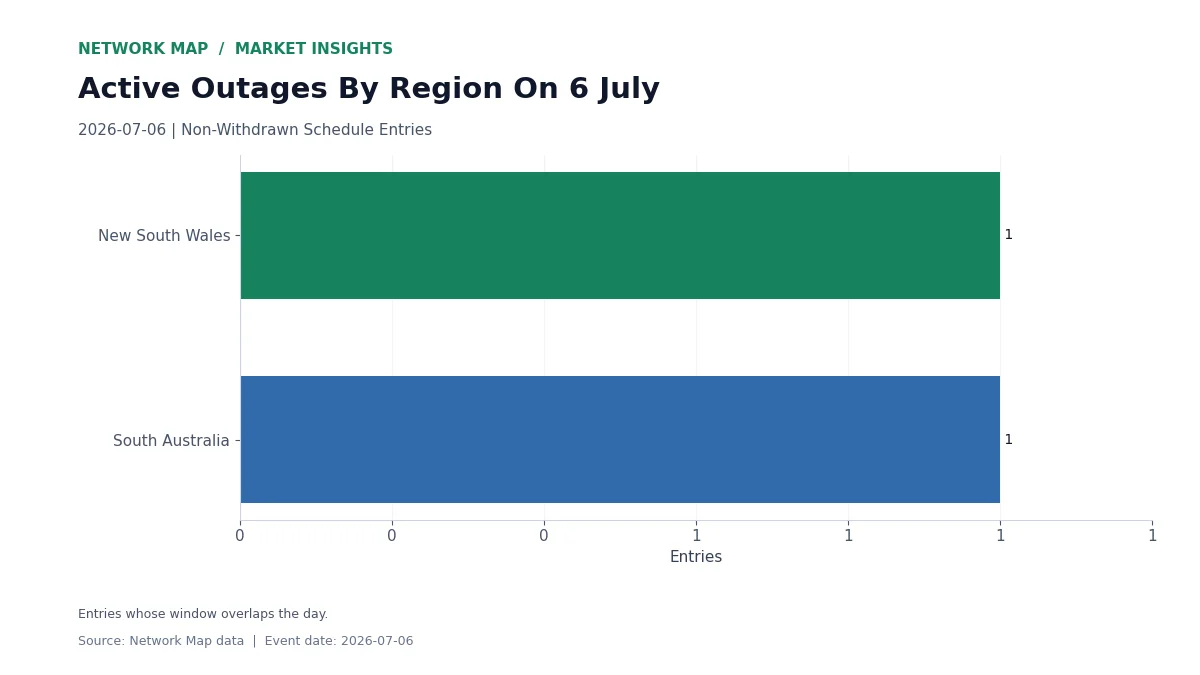
By region, the active entries were: New South Wales 1, South Australia 1. Counts cover each entry whose scheduled window overlapped the calendar day in fixed UTC+10.
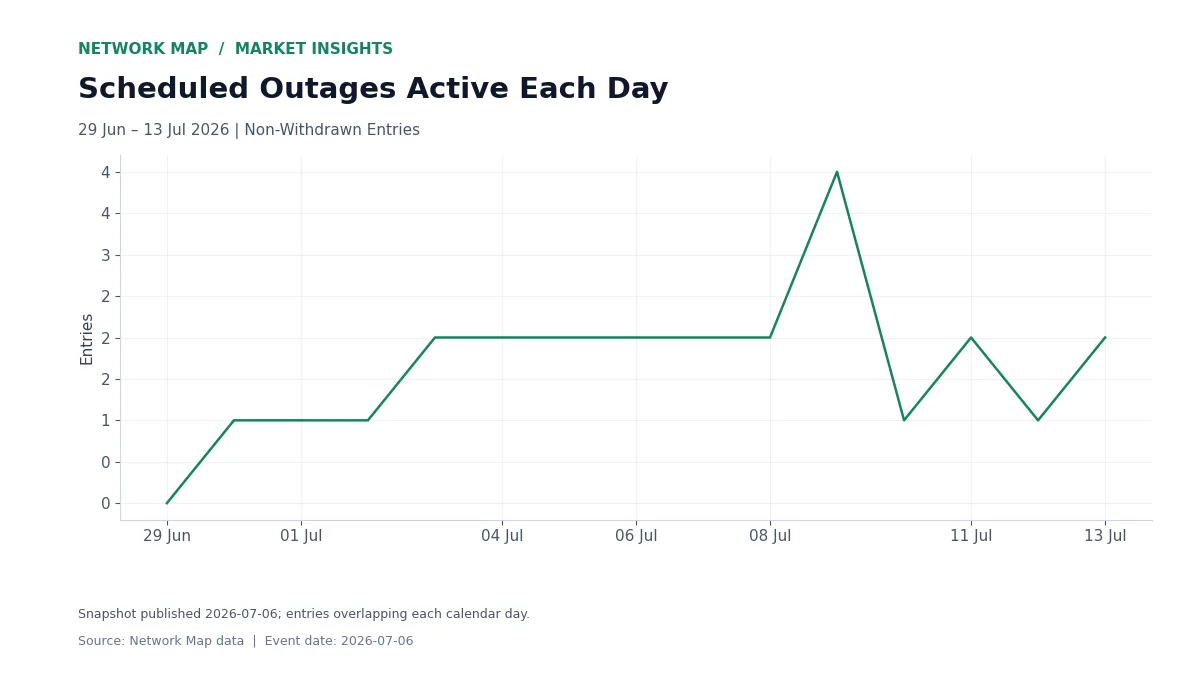
The Outage Load Around The Date
The first chart counts scheduled entries active on each day from 29 June to 13 July 2026, using the same publication. It shows whether 6 July sat inside a busy or a quiet stretch of planned network work.
The Longest Scheduled Windows
The longest active windows on the day were: Upper Tumut – Ravine (6X) 330kV Line (New South Wales), scheduled from 30 June 2026 08:07 to 10 July 2026 17:00; Tailem Bend – Tungkillo No.1 275 kV Line (South Australia), scheduled from 3 July 2026 08:00 to 9 July 2026 10:00.
The second chart shows the active entries by region.
Why Outage Schedules Matter
Scheduled outages reduce network capability while the work is under way. Interregional entries can lower transfer limits between regions, which links them directly to price separation and to the constraints that bind generators. Reading the schedule by date shows which days carry that exposure.
Figures use the outage schedule snapshot published on 6 July 2026, with withdrawn entries excluded and times in fixed UTC+10.